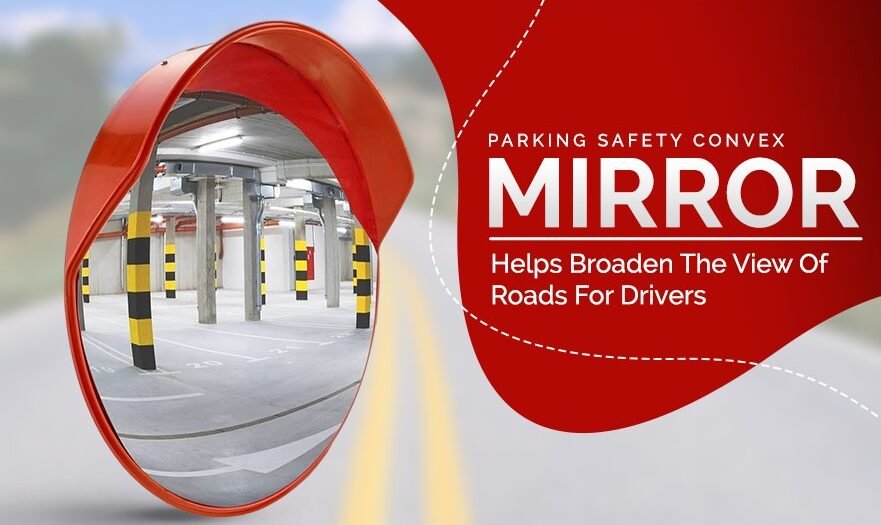
Understanding Traffic Mirrors: A Critical Component of Road Safety
In an era when road safety is becoming increasingly paramount, traffic mirrors, also known as convex road safety mirrors, have emerged as essential tools in preventing accidents and enhancing visibility in both public and private traffic environments. These simple yet effective safety devices are now widely adopted across urban and rural landscapes, from busy intersections to residential driveways and commercial parking structures.
This article delves into traffic mirrors, how they function, their different types, and, most importantly, how to determine the correct size and material for specific applications to ensure optimal safety and performance.
What is a Traffic Mirror?
A traffic mirror is a convex, typically lightweight, and durable mirror designed to be installed outdoors in areas with vehicular or pedestrian traffic. These mirrors are specifically engineered to provide a wide-angle reflection, allowing drivers, cyclists, and pedestrians to see around corners, over obstacles, or into blind spots.
You’ll commonly find them mounted:
-
On roadsides opposite concealed driveways or junctions
-
At the exits of parking structures
-
At tricky road intersections
-
In busy commercial or residential car parks
-
Near warehouse loading bays
-
Inside tight industrial or garage spaces
These mirrors are an invaluable visual aid for improving situational awareness, reducing blind spots, and allowing safer decisions in high-risk or limited-visibility environments.
How Do Traffic Mirrors Work?
The key to the functionality of traffic mirrors lies in their convex surface. Unlike flat mirrors, convex mirrors bulge outward, enabling them to reflect a much wider field of view. This expanded perspective allows drivers to:
-
See oncoming vehicles and pedestrians that would otherwise be obscured
-
Assess cross-traffic at blind intersections
-
Safely exit driveways or side roads
-
Navigate tight or confined spaces with greater precision
This wide-angle visibility makes convex mirrors particularly useful in scenarios where quick judgments must be made based on the presence and speed of approaching traffic.
Key Considerations When Choosing a Traffic Mirror
Selecting the right traffic mirror requires a thoughtful evaluation of several key factors:
1. Purpose of the Mirror
First, understand why the mirror is needed:
-
Is it for a roadside junction?
-
A concealed driveway exit?
-
A car park corner or industrial zone?
-
A pedestrian-heavy area?
Each location may require a different size, shape, or mounting method.
2. Viewing Distance
The maximum viewing distance is one of the most critical criteria when selecting a traffic mirror. This is the optimal range from which the mirror can be viewed clearly and effectively.
Here’s a general guide for circular convex mirrors:
-
300mm diameter – up to 3 meters viewing distance
-
600mm diameter – up to 11 meters
-
800mm diameter – up to 20 meters
Using a mirror that is too small may limit visibility and fail to offer a comprehensive view of oncoming traffic, reducing its effectiveness and potentially endangering users.
3. Mounting Height and Location
Proper positioning and articulation of the mirror are essential for maximum utility. Mirrors need to be:
-
Mounted at eye level for the intended viewer (e.g., drivers in a sedan, truck, or cyclist)
-
Angled to capture the full width of the road or access point
-
Placed securely to avoid vibration or damage due to weather or impact
4. Environment Type
Mirrors for outdoor use must be robust, UV-stabilized, and capable of withstanding extreme weather conditions. Indoor traffic mirrors used in warehouses or car parks may have different specifications.
Types of Traffic Mirrors
Traffic mirrors come in various shapes, sizes, and frame styles to suit different applications. Here are the main types:
● Circular Convex Mirrors
The most common and widely used design. Offers a balanced field of vision and is ideal for most roadside and driveway applications.
● Rectangular Mirrors
Offer the same viewing capabilities as circular ones but are better suited for space-restricted areas. For example, a 600x400mm rectangular mirror provides the same viewing distance as a 600mm circular mirror while taking up less wall space.
● Half-Dome or Half-Round Mirrors
Typically used in confined indoor spaces like multi-storey car parks or warehouses. Mounted on ceilings or high walls, they help monitor movement around corners or intersections.
● High Visibility Mirrors
Framed with bright, striped designs in red-white or yellow-black to enhance visibility, particularly useful in locations where the mirror may be obscured by trees, signs, or other obstacles.
Traffic Mirror Materials and Durability
The material from which a traffic mirror is constructed significantly impacts its quality, longevity, and safety.
● Acrylic and Polycarbonate
Common in mid-range outdoor mirrors. These materials are lightweight, UV-resistant, and provide decent durability and reflection quality.
● Stainless Steel
Offers the highest level of strength and is ideal for environments prone to vandalism, impact, or harsh weather. These are often used in industrial zones or rural areas with agricultural equipment.
● Thermoplastic Frames
Frames made of UV-treated thermoplastics resist cracking and discoloration over time. They also enhance the durability of the overall unit.
● Fog-Free and Anti-Frost Mirrors
Innovative traffic mirrors use Latent Heat Technology to prevent fog and frost without needing an external power source. These are especially valuable in regions with high humidity or fluctuating temperatures, where condensation can make regular mirrors ineffective.
Applications of Traffic Mirrors
● Residential Use
Homeowners with concealed driveways or garages opening onto busy roads benefit immensely from driveway mirrors that help avoid accidents when reversing or exiting.
● Commercial Parking
Shopping centers, office buildings, and apartment complexes utilize traffic mirrors in car parks to facilitate safe navigation and prevent vehicle-to-vehicle collisions.
● Public Road Intersections
Government and municipal bodies install traffic mirrors at blind spots, bends, and narrow country roads to allow better driver visibility at potentially dangerous points.
● Industrial Facilities
Warehouses, factories, and logistic centers often use indoor traffic mirrors to improve safety around corners, aisles, and loading bays.
Conclusion
Traffic mirrors are a simple yet highly effective safety solution that can dramatically reduce the risk of accidents in environments where visibility is compromised. Whether mounted on a country road, outside a suburban home, or within a bustling car park, these convex safety mirrors provide essential wide-angle vision that helps people make safer, faster decisions.
Choosing the right traffic mirror involves considering the location, viewing distance, environment, and materials. By understanding these factors and investing in high-quality, appropriately sized mirrors, property owners, city planners, and safety professionals can make significant improvements in both public and private traffic safety.

I am a passionate blogger, researcher, and author creating insightful content that inspires learning and creativity. I also accept guest posts and link insertions.
