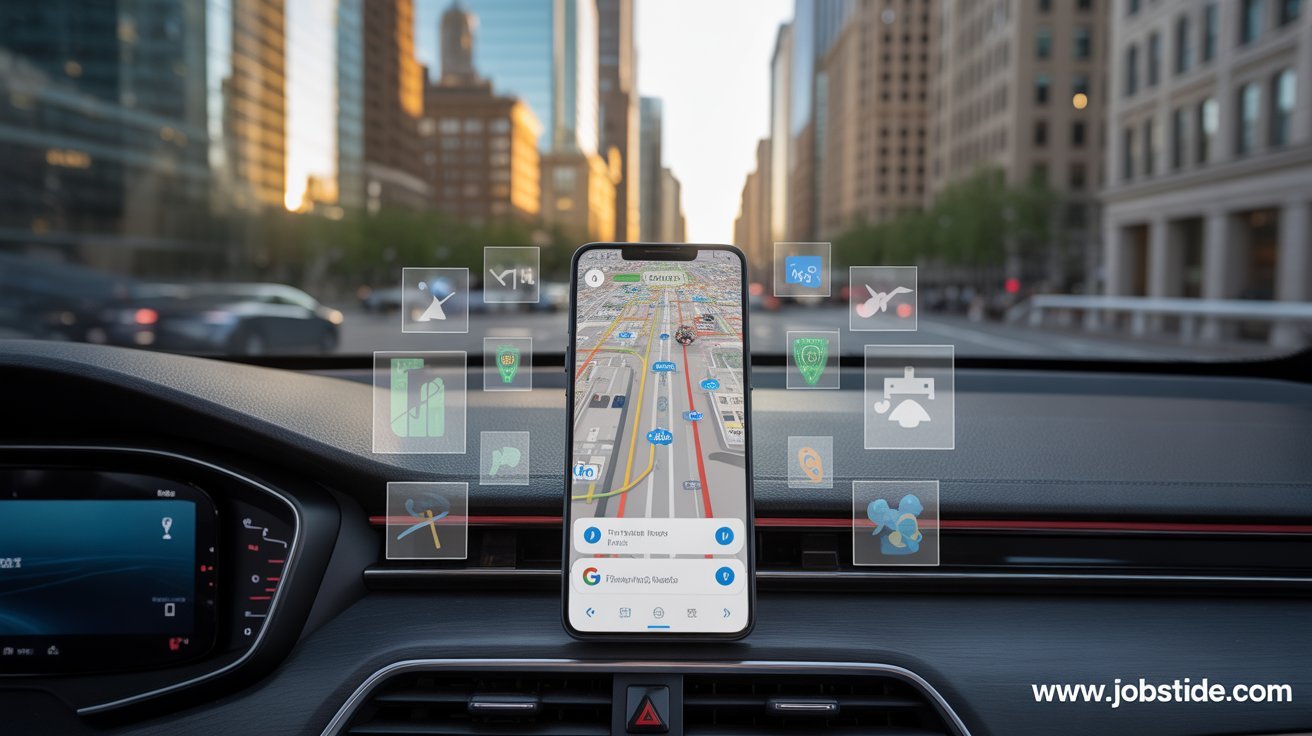
Waze is a free, community-driven GPS navigation app that guides millions of drivers through real-time traffic updates and user-generated alerts. But behind its free service lies a powerful Waze business model that cleverly blends location-based advertising, data partnerships, and smart technology to generate profit. The company’s unique Waze monetization strategy allows it to earn money without charging users directly, focusing instead on connecting local businesses with nearby drivers.
Understanding how Waze earns money reveals how innovative navigation apps can balance user value, community engagement, and sustainable business growth in today’s competitive digital ecosystem.
Introduction – Understanding Waze’s Global Popularity
Waze is one of the world’s most trusted GPS navigation apps, helping millions of drivers save time every day. Its community-based navigation approach allows users to share live updates about accidents, traffic jams, and road hazards. These real-time alerts make Waze different from traditional navigation technology that relies only on static maps.
Unlike many apps that charge a fee, Waze is completely free. Yet, it’s owned by Google LLC, one of the biggest advertising companies in the world. So, how does Waze earn money? The answer lies in its clever Waze business model and monetization strategy, which combine location-based advertising, data partnerships, and smart technology.
Through continuous innovation, Waze has built a strong global reputation. Its users trust it not only for real-time traffic updates but also for its smooth, friendly, and community-driven experience.
The Origin Story – How Waze Came Into Existence
The story of Waze history begins with FreeMap Israel, a volunteer mapping project created by Ehud Shabtai in 2006. Later, Uri Levine and Amir Shinar joined the project, and together they turned it into a powerful community mapping project. Their goal was to create a free navigation app powered entirely by users’ real-time data.
This concept quickly grew. People loved contributing to maps and receiving better routes in return. Soon, Waze became an Israeli tech startup success story, combining digital mapping algorithms, mobile GPS tracking, and crowdsourced navigation data.
By 2013, Waze had millions of users worldwide. It was clear the company had created something special—a navigation app that not only served users but also held enormous app monetization model potential.
Google’s Acquisition of Waze – A Strategic Move
In 2013, Google LLC acquired Waze for about $1.1 billion. Many questioned why Google needed another mapping service since it already owned Google Maps. The answer was Waze’s powerful community-driven navigation app and its potential for location-based advertising.
This Google acquisition of Waze wasn’t about competition; it was a strategic investment in urban traffic management and location-based intelligence. Waze’s crowdsourced navigation data gave Google fresh insights into real-time driver behavior and city movement patterns.
After joining Google, Waze retained its independent identity but gained access to Google Ads integration, resources, and research in AI-powered navigation. This move transformed Google-owned Waze into a global player in smart mobility solutions.
How Does Waze Work? Inside Its Community-Driven Model
Understanding how Waze earns works step by step helps explain its success. Each user acts like a sensor, sending user-generated data such as speed, route, and incidents. This information creates a network of live traffic alerts shared instantly across the platform.
The app collects this crowd-sourced traffic data and processes it with predictive routing algorithms. Then, it suggests the best, fastest route and updates it in real time. Every report strengthens the map’s accuracy and benefits the whole community.

Waze also gamifies participation. Drivers earn points for reports and can climb the ranks of community contributors. This user engagement keeps the system vibrant and ensures a continuous flow of data-driven insights.
Waze’s Business Model Explained
The Waze earn business model revolves around its freemium business model design: the app is free for users but generates revenue through advertisers, data partners, and cities. Waze acts as a link between drivers, businesses, and governments.
Its core business & monetization approach has three main elements:
- In-app advertising that connects local businesses with nearby drivers.
- Data partnerships that help cities manage urban mobility data.
- APIs & integrations that enable third-party apps and cars to use Waze data.
This combination makes Waze a unique player in the digital mapping industry. It earns through advertising revenue streams while offering valuable navigation software solutions that improve cities’ mobility and safety.
How Waze Earns and Makes Money – Complete Revenue Model
Location-Based Advertising (Waze Ads)
The main income source in the Waze revenue model is its Waze advertising platform. Businesses can display branded pins, promoted search results, and zero-speed takeovers on drivers’ screens. These are forms of hyperlocal marketing where ads appear only when relevant to a driver’s current route.
| Ad Type | Description | Example |
|---|---|---|
| Branded Pins | Icons on the map showing nearby stores | A gas station or café appears as you approach |
| Promoted Search | Paid results that appear on in-app search | A local mechanic shop ranks higher |
| Zero-Speed Takeovers | Full-screen ads shown when stopped | Fast-food ad at a traffic light |
This targeted mobile advertising ensures businesses reach customers precisely when they are likely to act—making Waze’s ad network one of the most powerful examples of GPS app monetization in action.
Data Partnerships and Waze for Cities Program
Another source of revenue comes from the Waze Earn for Cities program, where anonymised traffic data supports city governments and planners. This data partnership helps improve road safety and congestion control.
These collaborations use city data integration, traffic analytics, and real-time data sharing. Although Waze does not sell personal data, the aggregated insights drive smart city navigation systems and support urban traffic management.
By combining its community data with municipal planning tools, Waze delivers unmatched transportation analytics and contributes to infrastructure planning data that cities depend on.
Waze Beacons and In-Car Integrations
Waze Beacons are small Bluetooth beacons that guide drivers through tunnels where GPS signals drop. This feature showcases how Waze expands its ecosystem beyond mobile. Automakers also embed an integrated car dashboard navigation powered by Waze.
These integrations demonstrate how Waze’s monetization strategy blends digital and physical navigation. Although these features bring smaller profits compared with ads, they strengthen Waze’s brand and open the door to connected car technology and future fleet optimization software.
The Power of Data – How Waze Earns and Leverages Information Without Selling It
Does Waze sell user data? No—it never directly sells personal information. Instead, it uses anonymized user data to create data-driven insights for partners. By analyzing driver behavior data, Waze can help improve predictive traffic management without violating privacy.
This practice represents ethical data monetization and reflects a privacy-focused app design. Waze’s commitment to data anonymization and user consent ensures it stays compliant with international privacy standards.
Through aggregated statistics, Waze supports businesses and cities with tools that improve location privacy, safety, and route efficiency. The result is a safe navigation app that profits responsibly while maintaining user trust.
Challenges and Limitations in Waze’s Model
Even the strongest Waze business model faces real-world challenges. The biggest issue is dependence on active user data contributions. When few people use the app in certain areas, crowd-sourced traffic data becomes less accurate, reducing the quality of real-time traffic updates.
Waze must also balance advertising revenue streams with a pleasant user experience. Too many Waze ads or pop-ups might frustrate drivers. This risk creates tension between core business & monetization and keeping the platform simple, safe, and distraction-free.
Another hurdle is fierce competition. The ongoing Waze vs Google Maps comparison and rivals like Apple Maps, Lyft, and Uber make the navigation app market tough. Each brand fights for market share by improving AI-powered navigation, digital mapping algorithms, and user trust.
The Role of Google in Waze’s Ongoing Growth
After the Google acquisition of Waze, Google became the backbone of Waze’s expansion. Google LLC provides resources for research, scaling servers, and integrating Google Ads for advanced app monetization models.
With Google-owned Waze, advertisers gain seamless access to both Google’s ad systems and Waze’s location-based advertising platform. This connection enables smart targeting using geotargeted ads, creating synergy between mobile advertising and local commerce.
Furthermore, Google’s expertise in AI in navigation helps Waze upgrade predictive routing, reduce fuel consumption, and enhance driver experience. This cooperation shows how Google Maps vs Waze is not just competition—it’s collaboration inside a shared mobile app ecosystem.
Future of Waze – What Lies Ahead
The future of Waze earns points toward innovation in smart city integration and autonomous vehicle data. As vehicles and cities get smarter, Waze could evolve into a key player in predictive traffic management and connected car technology.
In the coming years, Waze will likely build on data-as-a-service models, offering transportation analytics and urban mobility data for governments and logistics companies. This transformation can expand its role beyond navigation into fleet optimization software and infrastructure planning data.
With continued advances in AI-powered navigation and machine learning, Waze’s monetization strategy may soon include premium subscription layers, smart routing for businesses, and integrated logistics tools for delivery fleets.
Is Building an App Like Waze a Profitable Idea?
Creating your own community-driven navigation app can indeed be profitable—but it requires strong technical foundations and strategic planning. You’ll need precise navigation technology, fast mobile GPS tracking, and engaging user-generated data systems.
To succeed, focus on app monetization models such as location-based advertising, hyperlocal marketing, and in-app advertising. Combining ads with optional premium features ensures steady advertising revenue streams while keeping the app free for most users.
Many app development companies now specialize in mobility app development similar to Waze. They can help design GPS-based applications with real-time alerts, route optimization, and even AI-powered navigation to compete in the global digital mapping industry.
How Our Team Can Help You Build a Waze-Like App
Our development team builds smart mobility solutions inspired by Waze Earn. We design apps using navigation software solutions and Waze earn APIs for real-time data sharing, urban traffic management, and route optimization.
We also integrate Waze Beacons, Bluetooth beacons, and tunnel navigation systems to ensure uninterrupted GPS tracking in every condition. Our developers can embed these systems directly into your mobile navigation UX or integrated car dashboard navigation.
With our expertise in app-based advertising networks and data privacy practices, we ensure your platform respects location privacy, uses ethical data monetization, and fits within U.S. privacy regulations—making it ready for commercial launch.
Conclusion
In conclusion, Waze has mastered the art of turning a free GPS navigation app into a thriving business ecosystem. Through its Waze advertising platform, the company generates significant income from location-based advertising, branded pins, and Waze-promoted search placements that seamlessly blend into the driving experience. Beyond ads, its data partnerships and the Waze earn for Cities program showcase how real-time traffic analytics and urban mobility data can improve city planning and transportation systems worldwide.
While Google LLC’s ownership strengthens Waze through powerful Google Ads integration and AI-driven insights, the app continues to uphold privacy standards through anonymized user data and ethical data practices. The future of Waze Earn lies in smart city integration, AI-powered navigation, and the potential for autonomous vehicle data sharing. Ultimately, Waze proves that innovation, community engagement, and data intelligence can coexist—creating a profitable model that redefines how navigation apps earn money while improving everyday travel for millions.
FAQs
How does the Waze app make money?
Waze earns money by transforming everyday driving into a smart advertising and data business — all while staying free for users. Its business model works on two fronts: for users, it offers real-time, community-driven navigation at no cost; for businesses, it provides location-based, hyperlocal ads that appear when drivers are near their stores. This way, Waze connects drivers, data, and businesses in one profitable ecosystem.
How is Waze free?
Waze is completely free to download and use for anyone aged 16 or older. However, users may still incur mobile and carrier data charges while using the app for navigation and real-time updates.
Who funds Waze?
In June 2013, Google acquired Waze Mobile for $1.3 billion. Today, Waze earns revenue through hyperlocal advertising, reaching over 130 million active users worldwide.
How profitable is Waze?
With its community-powered navigation and real-time updates, Waze impressively generated $400 billion in revenue in 2022. But since the app is completely free to use, you might wonder — how does Waze actually make money? Let’s break it down below.
Do police care about Waze?
Law enforcement should be cautious: Waze can reveal users’ movements with detailed locations and images that may be shared publicly-learn the police locator feature and protect your privacy.
Also Read: Google AdMob Earning vs AdSense: What’s the Difference

I am a passionate blogger, researcher, and author creating insightful content that inspires learning and creativity. I also accept guest posts and link insertions.
